Find Perfect Teaching Materials
Search from thousands of printables designed to make learning fun and engaging
Feelings and Emotions
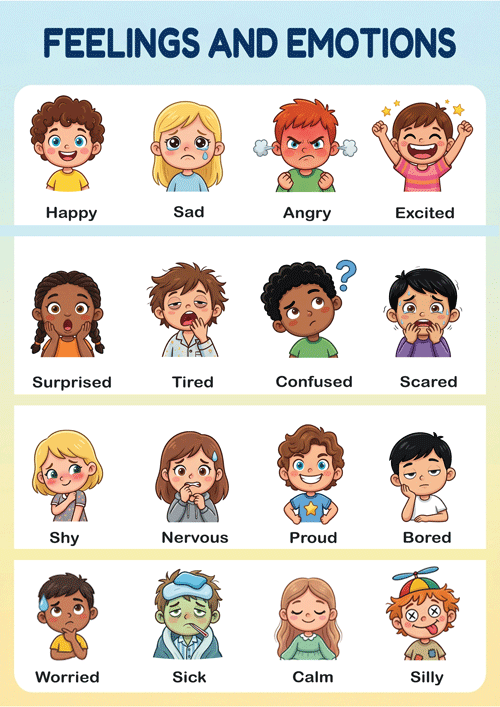
Help children learn to express their feelings in English with this colorful
Feelings and Emotions Flashcards PDF.
This set includes clear, engaging illustrations of common emotions such as
happy, sad, angry, excited, tired, confused, and more.
Perfect for ESL teachers, parents, and homeschoolers, these printable flashcards are ideal for vocabulary lessons, speaking activities, and classroom games.
Use them to build emotional awareness and improve English communication skills in a fun and interactive way.
3 Engaging Games for "Feelings and Emotions" Flashcards
-
"Mime the Emotion" (Charades)
How to play:
A student comes to the front of the class and picks a flashcard without showing it to the others. They must act out the feeling using only facial expressions and body language.
The Goal:
The rest of the class must guess the emotion by calling out, "Are you [Sad]?" or "You are [Angry]!"
ESL Benefit:
Encourages active listening and reinforces vocabulary through physical movement (TPR - Total Physical Response).
-
"How Do They Feel?" Storytelling
How to play:
Tape 4 or 5 different flashcards to the board. Create a simple "What happened?" scenario for each. For example: "It is your birthday, and you see a big cake!"
The Goal:
Students must point to or hold up the correct card (e.g., Excited or Happy) that matches the situation.
ESL Benefit:
Helps students move beyond simple word recognition to understanding the context and "why" behind different emotions.
-
"Mirror, Mirror" Pair Work
How to play:
Put students in pairs facing each other. Student A holds up a flashcard (e.g., Surprised). Student B must "mirror" the expression on the card. Then, they swap roles.
The Goal:
Practice pronunciation by having the "mirror" student say the word clearly while making the face: "I am surprised!"
ESL Benefit:
Builds confidence in speaking and helps younger children connect the English word directly to the physical feeling.